Quick answer: For most business teams in 2026, in Claude vs ChatGPT, Claude is the stronger choice for long-document analysis, coding, compliance-sensitive writing, and complex multi-step instructions, while ChatGPT is the stronger choice for image and voice generation, real-time web research, and a wider third-party app ecosystem.
Claude vs. ChatGPT for Business: Where Claude Wins
Anthropic’s growth story in 2026 has been concentrated almost entirely in the enterprise segment, and the numbers back it up. By the end of 2025, Anthropic commanded roughly 40% of enterprise LLM API spend, up sharply from just 12% in 2023, while OpenAI’s share fell to about 27%. Ramp’s March 2026 AI Index, which tracks corporate spending across more than 50,000 businesses, found that Claude wins approximately 70% of head-to-head matchups among companies buying enterprise AI tools for the first time.
Long Document Analysis and Context Window
This is Claude’s clearest technical advantage in any Claude vs ChatGPT for business evaluation. Claude’s standard paid tier handles 200,000 tokens — roughly 150,000 words or 300 pages — and its API scales up to 1 million tokens for larger workloads. ChatGPT’s standard context window sits at 128,000 tokens on most paid plans. For teams working with employee handbooks, vendor contracts, or a quarter’s worth of customer feedback exports, that gap matters in practice, not just on paper.
Enterprise Coding and Reasoning
Claude holds roughly 54% of the enterprise coding market compared to OpenAI’s 21%, and on the SWE-bench Verified benchmark, Claude Opus scored 80.8% against GPT-5.2’s 80.0% as of May 2026 — a razor-thin gap, but one that has held steady in Claude’s favor. Claude’s reasoning also tends to hold up better on tasks requiring multiple simultaneous constraints, such as reviewing a contract against standard terms or following a detailed style guide across a long document.
Compliance-Heavy Industries
Roughly 70% of Fortune 100 companies use Claude today, with adoption concentrated in finance, legal, and healthcare — sectors where a single compliance error costs far more than the AI budget itself. Claude is generally considered more conservative about generating content that could create liability, making it a common default for regulated industries.
Claude vs ChatGPT for Business: Where ChatGPT Wins
ChatGPT still leads on scale and breadth. It has crossed 1.1 billion monthly users and maintains roughly 92% adoption across the Fortune 500, even as its share of the overall AI assistant market slipped below 50% for the first time in mid-2026. Its advantages are less about raw reasoning and more about ecosystem:
- Multimodal generation — native image and video generation, plus voice interaction, in a single interface.
- Real-time web access — stronger built-in browsing for market data, competitor research, or breaking news during drafting.
- App and plugin ecosystem — 60+ integrations and a GPT Store that lets teams extend the tool without custom engineering.
Claude vs Chatgpt: A common setup many teams settle into: Claude for writing, document review, and client-facing content where tone consistency matters, and ChatGPT for tasks that need current data pulled from the live web or visual assets.
Claude vs ChatGPT for Business: Market Share and Adoption Data
The competitive picture shifted meaningfully through 2026. ChatGPT’s share of global AI assistant users fell to 46.4% by the end of May 2026—its first dip below 50% since launching in November 2022—while Gemini climbed to roughly 27% and Claude posted steady enterprise gains. At the same time, Anthropic’s annualized revenue overtook OpenAI’s in April 2026, crossing $47 billion against OpenAI’s $25 billion run rate.
The takeaway: In Claude vs Chatgpt comparison, ChatGPT still wins on consumer scale, but Claude has been winning where the money actually gets spent — inside operational, revenue-generating business workflows.
Making Claude vs ChatGPT for Business Work in Your Actual Workflow
Choosing a model is the easy part. The harder problem — and the one that determines whether any of these numbers translate into results for your team—is adoption.
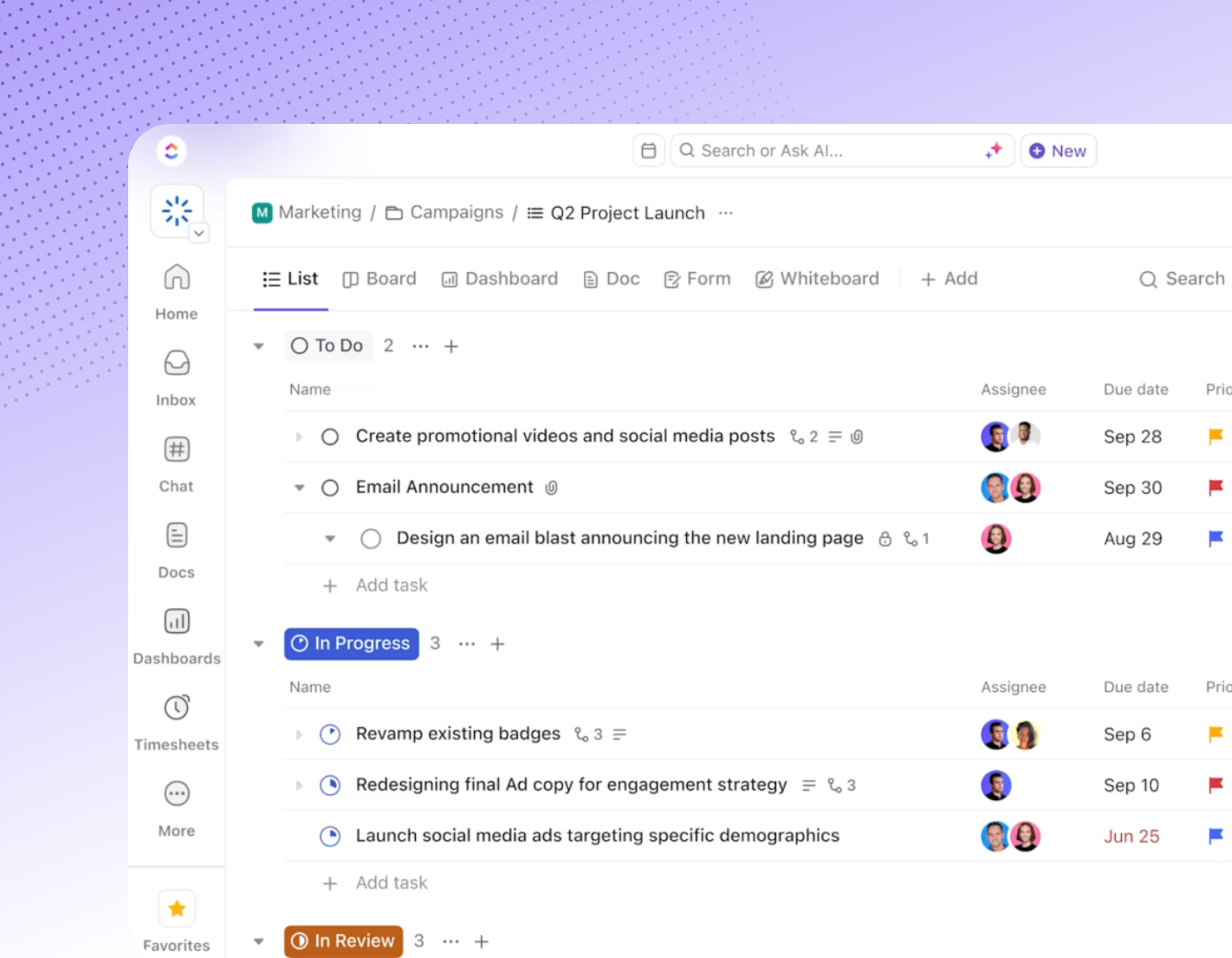
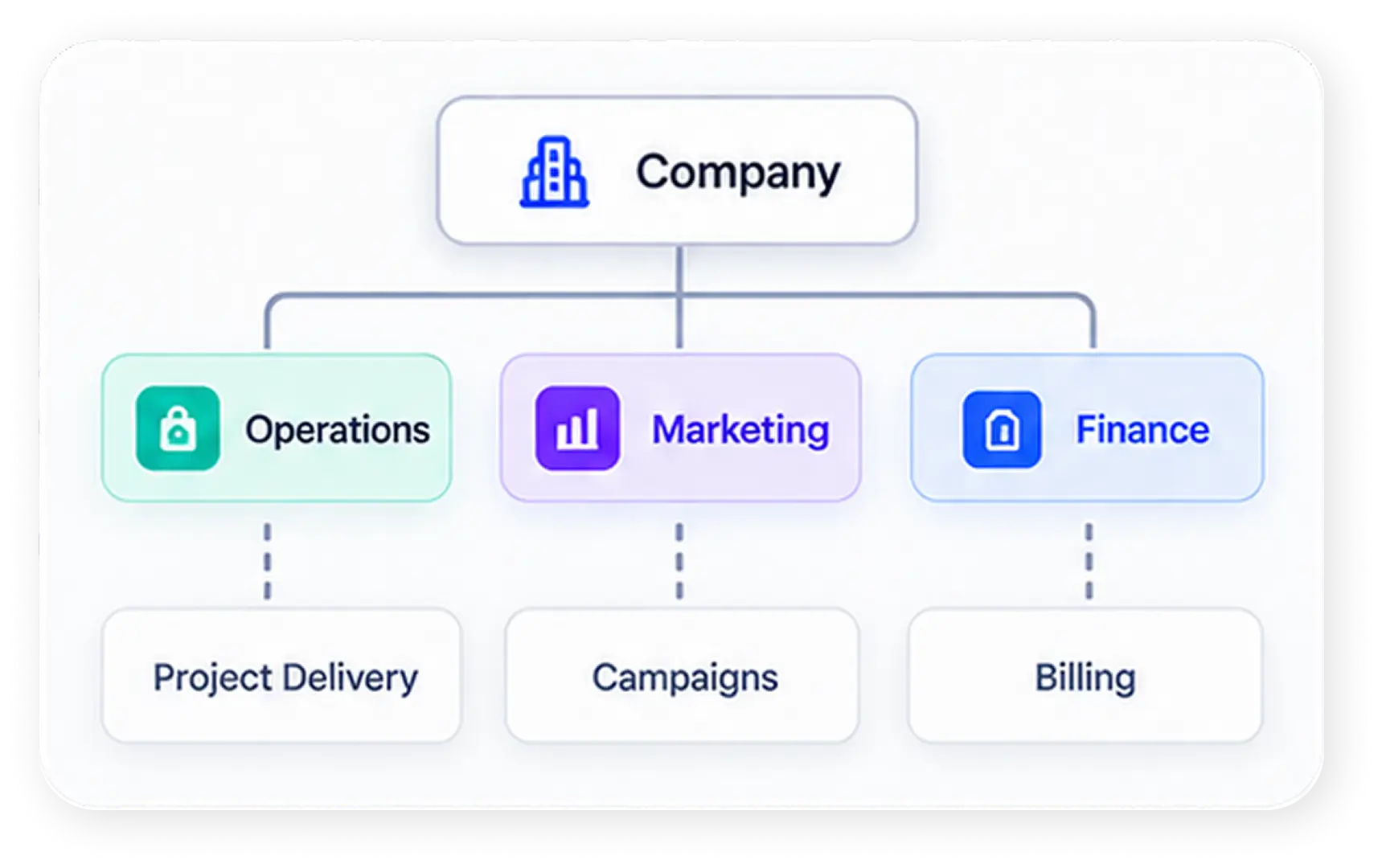
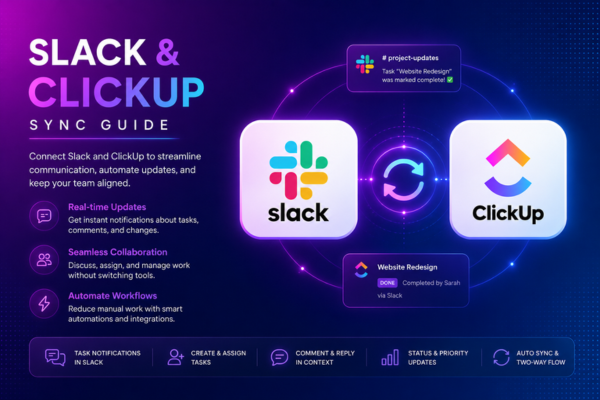
This is where a firm like Dtech Systems fits into the picture. Dtech is a Diamond ClickUp and Anthropic partner based in Riyadh and London, and its entire model is built around the observation that licences get billed but habits rarely change. Rather than selling a platform and walking away, Dtech maps a team’s real processes first, then implements Claude directly inside a ClickUp workspace — grounded in a company’s actual tasks, documents, and decisions rather than the open internet. That means Claude can draft and summarise from what’s already in the workspace, automate routing and triage across a team’s real process, and answer questions from a company’s own operational record instead of a generic chat window.
Output quality that needs minimal editing is your top priority. You work with long documents (contracts, research papers, reports) regularly. You want genuine critical feedback on your work, not just positive reinforcement. You need the strongest AI coding tools (Claude Code powers Cursor and is the leading terminal coding agent).
You want the broadest feature set: image generation, voice mode, plugins, and custom GPTs. You prefer the largest ecosystem of third party integrations and community created tools. You need a single tool that covers the widest range of tasks, even if each individual capability is not the absolute best.
Bottom Line:
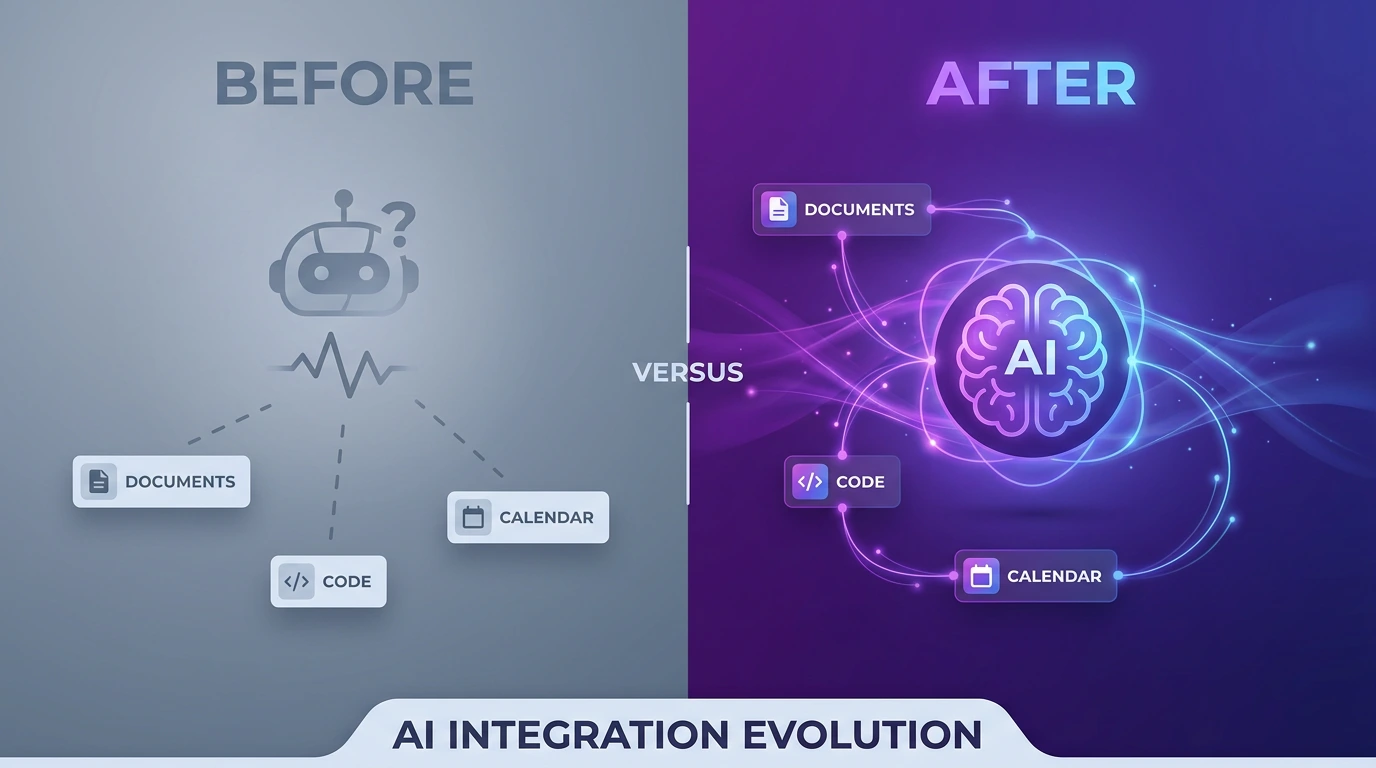
Claude vs ChatGPT for business isn’t a question with one correct answer — it’s a question about which numbers matter most to your team. If your work runs on long contracts, codebases, or regulated documentation, Claude’s 200K–1M token context window and 70% win rate in head-to-head enterprise matchups make it the safer default. If your work leans on live web data, visual content, or a deep app ecosystem, ChatGPT’s 1.1 billion users and broader integrations still make it hard to beat. And if budget allows, the fastest-growing group of enterprise teams isn’t choosing at all — they’re running both.
Frequently Asked Questions (FAQs)
Claude vs ChatGPT which is better for business in 2026?
The best option ultimately depends on your business needs, existing tools, security requirements, and budget.
For most businesses, ChatGPT is the better all-around choice in 2026 because it offers a broad range of capabilities for writing, research, data analysis, coding, automation, and business workflows. Claude can be an excellent choice for teams focused heavily on software development, technical work, and long-form document analysis.
How much does Claude vs ChatGPT cost for a business team?
Both platforms price their entry-level paid seat at roughly $20 per user per month — Claude Pro and ChatGPT Plus. Team and enterprise tiers add admin controls, single sign-on, and a default of not training on customer data, which is usually what justifies the higher price over an individual seat rather than any difference in raw model quality. Regulated industries should price whichever tier includes a data-processing agreement and a training-exclusion clause, regardless of vendor.
Do most companies need to pick just one, Claude or ChatGPT, for their business?
Not necessarily. Recent enterprise surveys in sectors like commercial real estate found that roughly 79% of enterprise users already pay for both platforms, using each for what it does best — Claude for financial document analysis and long-context work, ChatGPT for integrations and multimodal tasks. The bigger determinant of ROI isn't which single tool you pick, but whether your team's workflows and habits actually change to use it — which is why implementation and adoption support tend to matter more than the model choice itself.