Businesses are no longer asking whether they should adopt AI and automation. They’re asking how to use AI workflow automation effectively to streamline operations, reduce manual work, and improve productivity
Top AI Workflow Automation Trends for 2026
AI workflow automation is moving from experimental projects into everyday business operations. Instead of using technology as an isolated solution, organizations are connecting AI, project management, data, and internal processes to create a more intelligent way of working.
Here are the trends businesses should be paying attention to in 2026.
In the Gulf countries (Saudi Arabia, UAE, Qatar, etc.), AI has shifted from experimentation to an operational baseline. Regional AI adoption jumped from 62% to 84%, with the UAE government sector reporting 97% adoption.
1. AI Automation | Part of Everyday Workflows
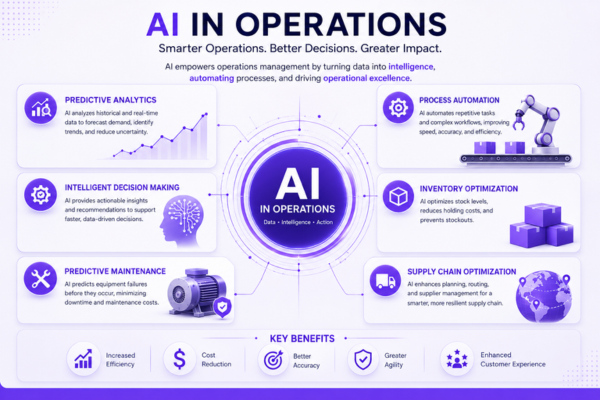
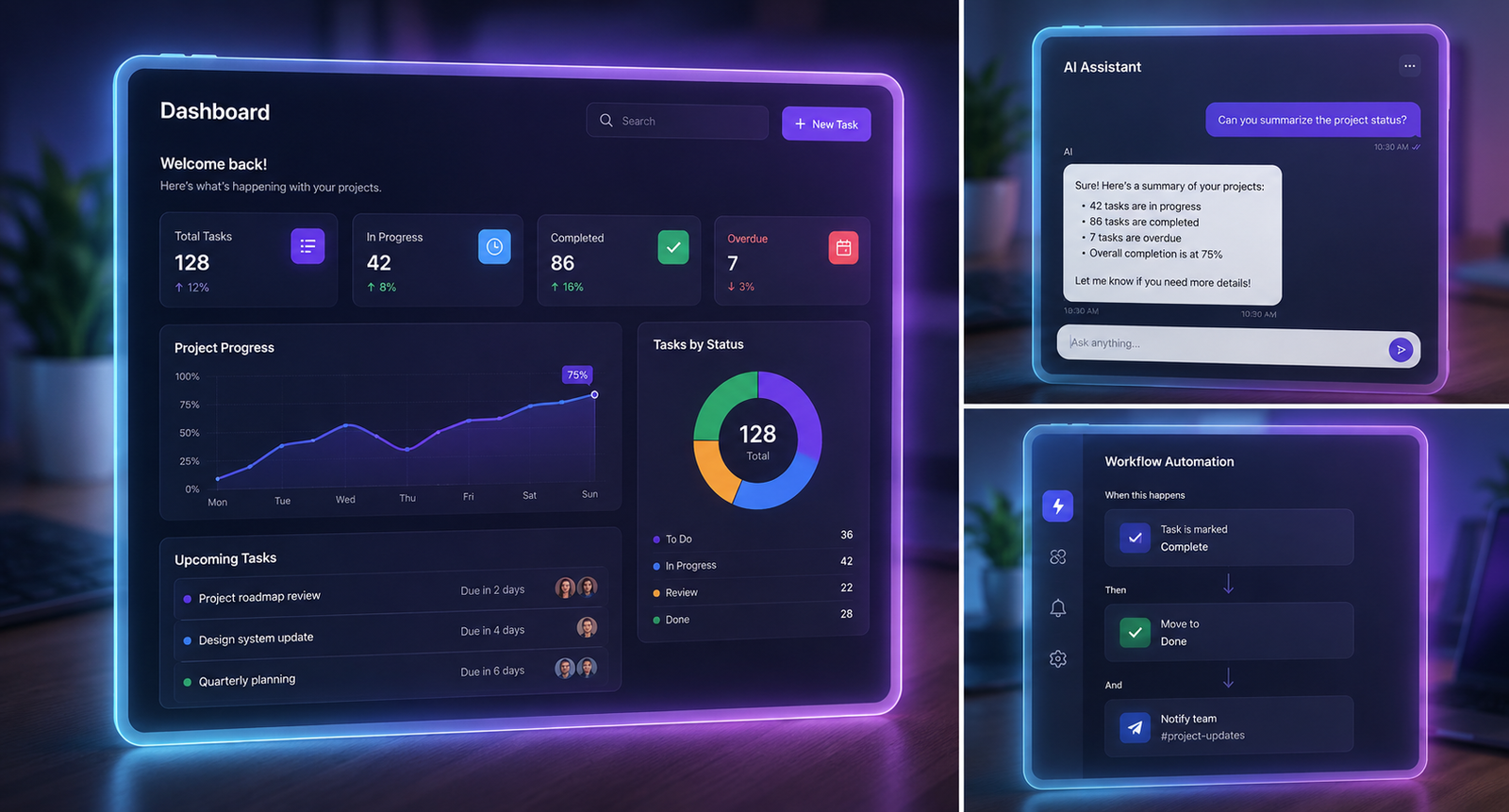
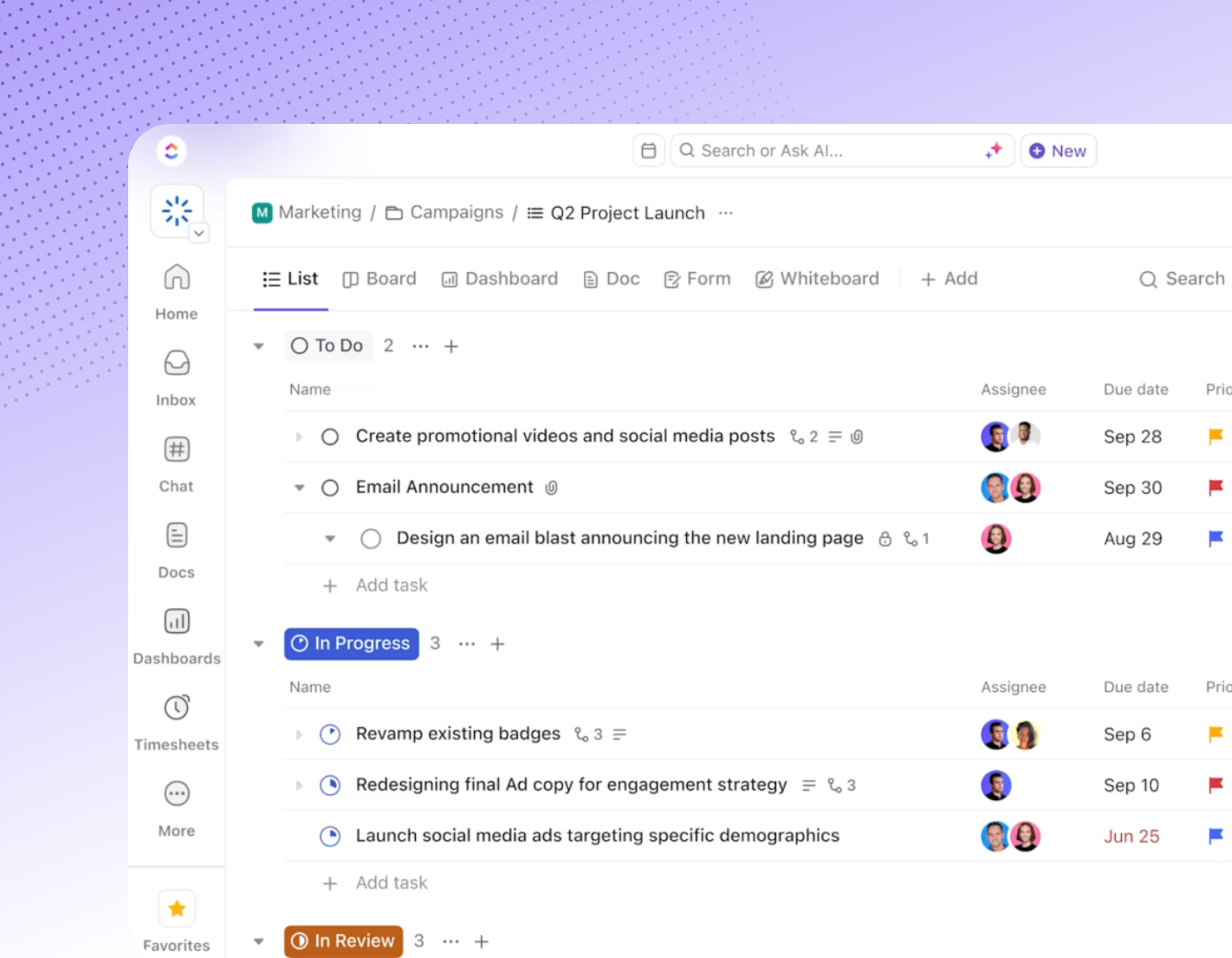
AI is moving beyond chatbots and content generation. Businesses are embedding it into everyday workflows to summarise information, create tasks, analyse data, draft content, and turn conversations into actions.
The goal is not to replace people. It is to remove repetitive work so teams can focus on decisions, customers, creativity, and strategic priorities. Dtech Systems helps businesses identify practical AI use cases and integrate them into existing workflows.
2. AI Workflow automation is moving beyond repetitive tasks
Traditional automation handled simple actions such as “form submitted → create task.” Modern automation can connect entire processes across people, systems, and decisions.
For example: New lead → qualification → task assignment → follow-up → reporting.
The focus is shifting from “What can we automate?” to “Where are our teams losing the most time?”
3. AI and humans are working together
The most effective AI workflow automation with human judgment. AI can summarize information, categorise requests, find patterns, and prepare recommendations, while people handle decisions, relationships, creativity, and approvals.
This creates a hybrid model where AI provides speed and scale, while people provide context and judgment.
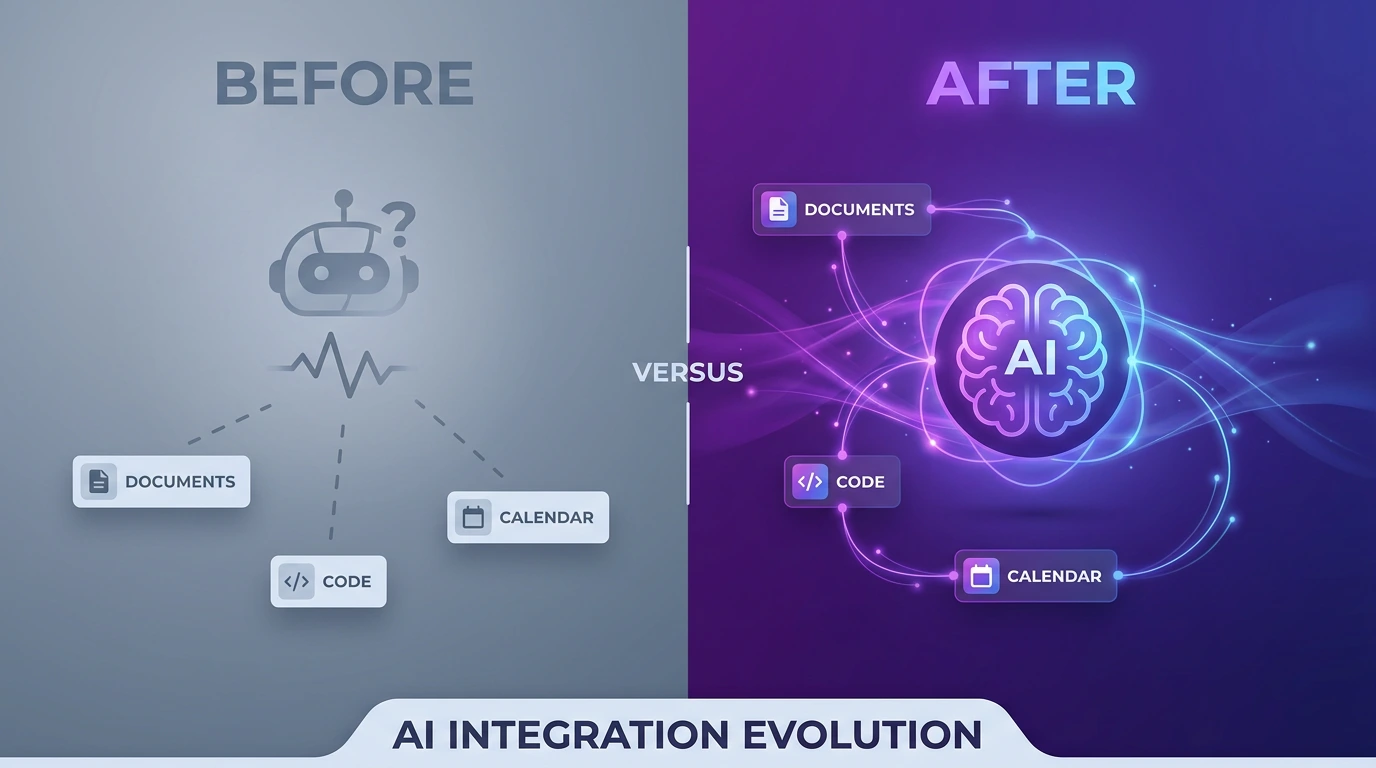
4. Businesses are prioritising connected systems
Even the best software can create inefficient operations when systems don’t communicate with each other. Disconnected tools force employees to manually move information between platforms.
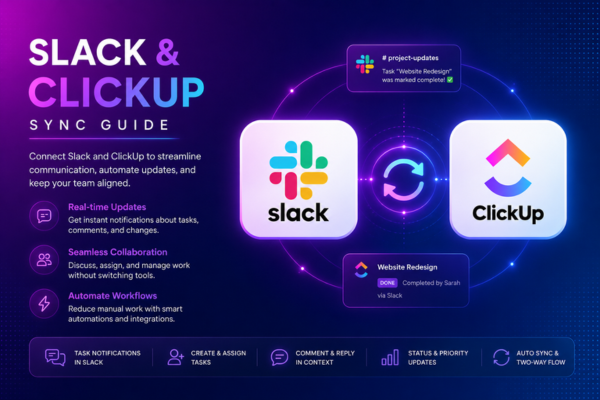
Connected workflows allow project management, CRM, communication, reporting, and AI tools to work together.
Less switching. Less duplication. More visibility.
5. Real-time data is becoming essential
Businesses increasingly need to know what is happening now—not at the end of the month.
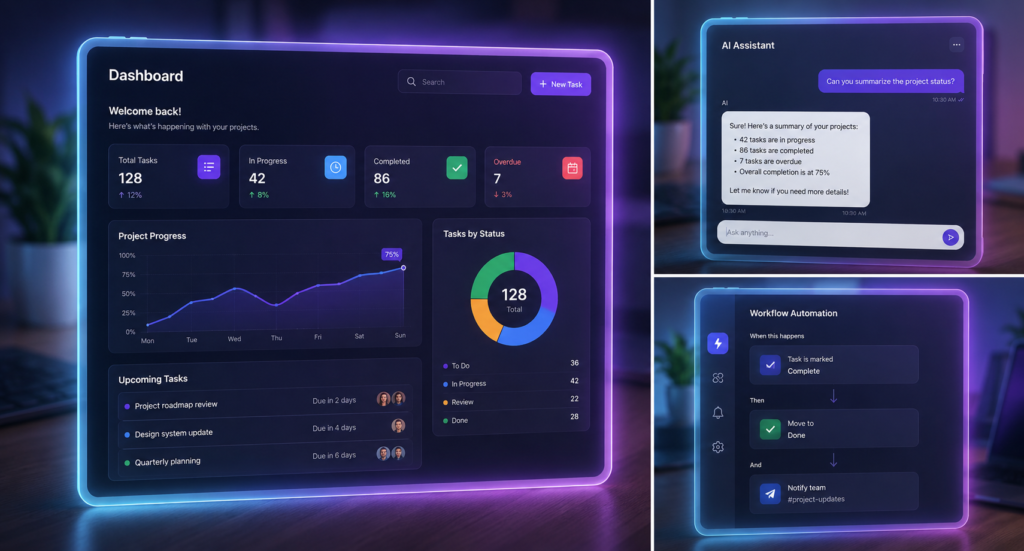
Real-time dashboards can show project progress, overdue tasks, bottlenecks, team performance, and resource usage. The goal isn’t more reporting; it’s better decisions with the data you already have.
6. AI-powered productivity is becoming more personalised
Every team works differently, so one-size-fits-all automation often falls short.
Modern AI and workflow systems can be built around specific teams, roles, processes, and business requirements, creating systems that adapt to how each organisation actually works.
7. Businesses are focusing on measurable ROI
AI adoption is moving beyond experimentation. Businesses want measurable results such as time saved, reduced manual work, faster response times, fewer errors, and improved productivity.
Technology should solve a business problem—not simply add another tool. At Dtech, we start by understanding the workflow, identifying bottlenecks, and designing solutions around measurable outcomes.
8. AI adoption requires people, not just technology
Buying an AI platform is easy. Getting people to use it effectively is harder.
Successful adoption requires clear processes, practical use cases, training, onboarding, and ongoing optimisation. Technology only creates value when teams actually use it.
How Businesses Can Prepare for AI Workflow Automation
You don’t need to automate everything at once. Start with the processes creating the most friction.
- Audit workflows — Understand how work actually happens.
- Identify bottlenecks — Find repetitive and disconnected processes.
- Choose the right technology — Focus on business needs, not trends.
- Implement gradually — Start with high-impact workflows.
- Train your team — Make adoption part of the implementation.
- Measure results — Track time, productivity, adoption, and business outcomes.
- Continuously optimise — Improve workflows as your business grows.
The Future Isn’t Just AI. It’s Better Ways of Working.
AI and automation are not the competitive advantage by themselves. Knowing where and how to apply them is.
The right workflow can eliminate unnecessary work, connect teams, improve visibility, and give people more time to focus on what matters.
At Dtech Systems, we help businesses implement AI, optimise workflows, improve ClickUp, and build connected systems designed around how their teams work.
Start with the problem. Build the right solution. Then optimise for growth.